
Insurance
Check the documents behind a claim.
A motor claim can include a garage estimate, towing invoice, assessor report and valuation. Kweli lets a claims handler check whether a file matches the version its authorised issuer registered. Start with a defined group of garages and assessors, then extend the workflow as more providers join.

Insurance in action
Watch how it works
Video not loading? Watch on YouTube
Motor Insurance Claims
A garage estimate is checked against what the garage actually issued, before the claim is paid.
The Insurance Ecosystem
Bring each issuer into the claim file, one provider at a time.

Garage

Hospital

Marine Operation

Engineering Inspection

Construction Project
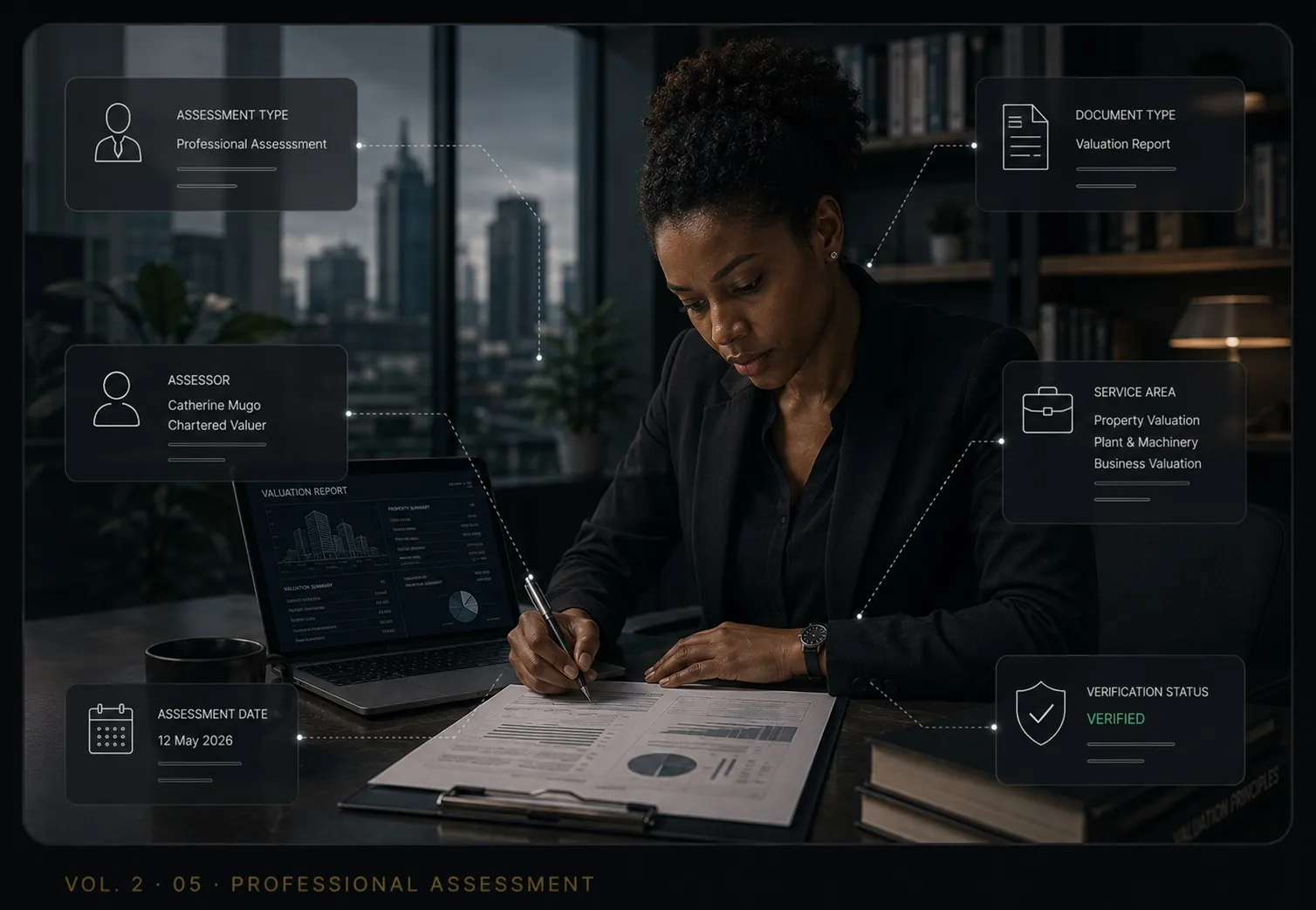
Professional Assessment
Explore Insurance Workflows
Start with motor claims. Extend to other lines.
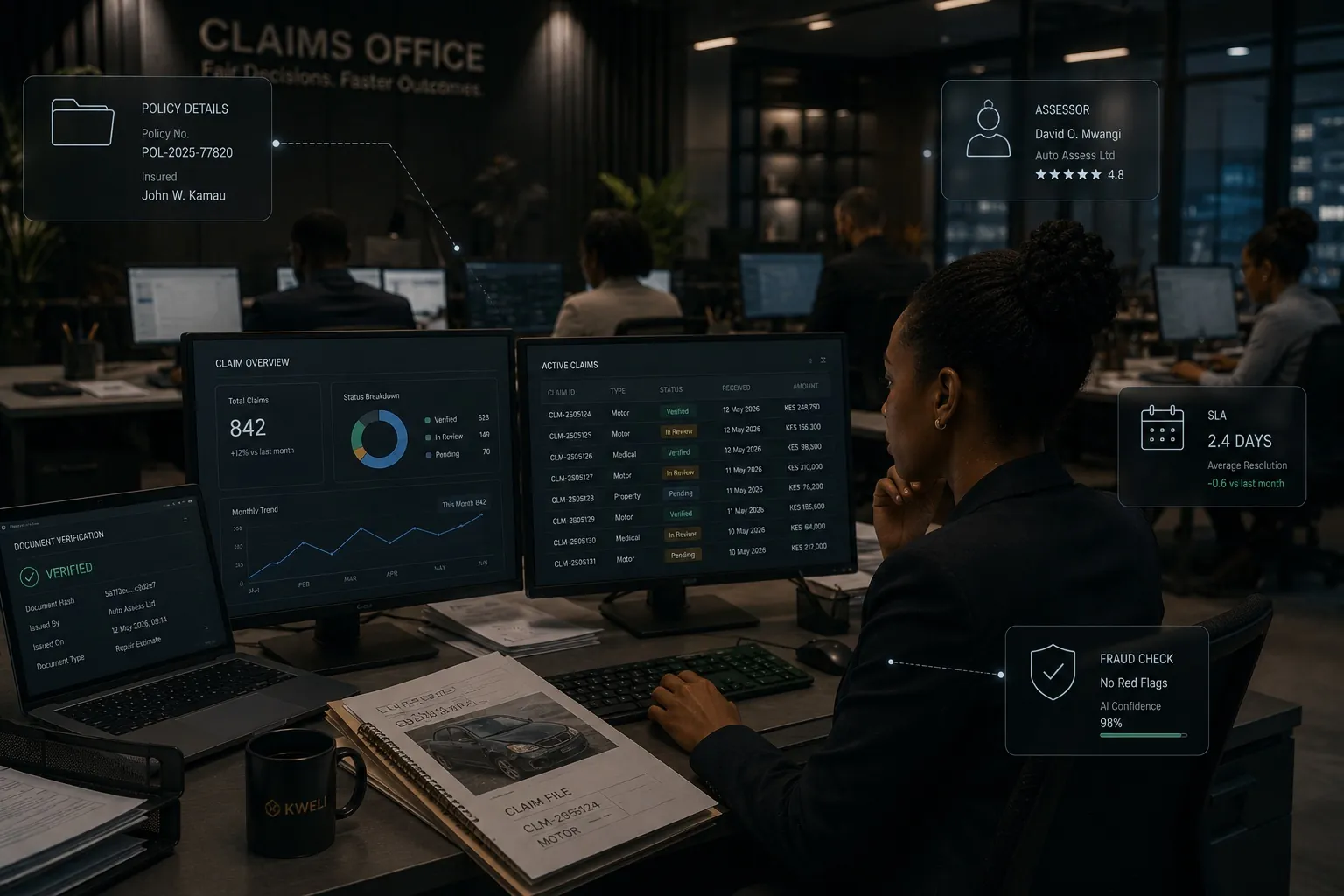
Motor
A garage or assessor registers its own final document. The claims handler scans the QR to review the issuer's record, then checks the file for an exact match. The insurer can begin with a small panel and one document type.
- Repair EstimateGarage
- Garage InvoiceGarage
- Assessor ReportAssessor
- Towing InvoiceTowing Provider
- Valuation ReportValuer
Document Journey
How a motor claim moves from estimate to decision.
The issuer creates the QR-bearing file first. The recipient then checks the QR record and the file itself.
Example: Repair Estimate Issuer: Garage
- 01
Issuer
Register the document
The approved issuer selects its source file. Kweli records its fingerprint and the details a recipient should check.
- 02
Issuer
Place the QR code
Kweli creates a proof ID and QR code. The issuer places the QR on the document.
- 03
Issuer
Download the issued file
Kweli records the fingerprint of the final file with its QR. The issuer downloads and shares that version.
- 04
Recipient
Scan the QR code
The recipient opens the proof record and compares its issuer and details with the document received.
- 05
Recipient
Verify the exact file
The recipient selects the digital file. Kweli checks its fingerprint against the final issued version.
A QR scan shows the issuer's record. The file check establishes whether this digital copy matches the issued version.
Kweli does not approve the claim and does not assess whether the repair cost is fair.
Business Impact
From a phone call to a fingerprint check.
Today
- Confirmation calls
- Email follow-ups
- Uncertainty about versions
- Manual exception handling
With Kweli
- Independent document verification
- Clear exceptions
- Stronger audit trail
- A clearer record of which version was checked
Deterministic, not probabilistic
A proof, not a probability.
Fraud-detection tools
Estimate whether a document looks suspicious. They score an unregistered document against patterns of known manipulation and return a likelihood — useful, but a probability, not a proof.
Kweli
Checks a presented document against the exact reference an authorised issuer registered at source, and returns a deterministic result: it matches, it doesn’t, or no record exists.
The two approaches are complementary. Detection helps where nothing was registered; Kweli gives certainty where it was.
Kweli does not claim to catch every form of insurance fraud. A document can be genuine and unaltered while the event it describes never happened.
Implementation
One workflow, proven in claims — not a platform rollout.
Choose one motor-claims document, such as the repair estimate
Invite a small panel of garages or assessors to register final files
Let claims handlers scan the QR and check the file
Review matches, exceptions and time spent on manual confirmation
Get Started
Ready to bring verification into your insurance workflows?
Show us the claims documents you handle most often. We can map a pilot around one issuer group and one clear workflow.